








Control Valve Accessories
The Essential Components Behind Every Reliable Control Valve
Control valves are the most critical actuating elements in chemical processing plants, yet many engineers focus solely on the valve body while overlooking the essential accessories mounted on it. Fisher positioners, filter regulators, pneumatic amplifiers, lock-up valves, and limit switches—if improperly selected or malfunctioning, even the best valve body becomes ineffective.
This guide provides a field-oriented perspective, explaining the functions, selection criteria, and failure symptoms of common control valve accessories in one comprehensive resource.
Positioner: The Brain of the Control Valve
🔧 Function
The positioner receives 4-20mA signals from DCS/PLC and controls output air pressure to precisely position the valve according to the input signal. It is the most critical valve accessory—without a positioner, the valve can only perform simple on/off control with poor accuracy.
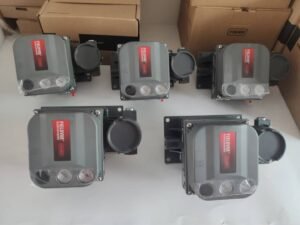
📋 Common Types
⚠️ Field Failure Symptoms
- Valve position not following signal
- Continuous oscillation (hunting)
- Slow response/lag
- Internal positioner air leakage
✅ Selection Considerations
- Hazardous area classification (explosion-proof rating)
- Single-acting vs. double-acting actuator
- HART communication capability
- Diagnostic features (for smart positioners)
💡 Field Quick Check: Use a AMS Trex Device Communicator to command 50% opening. Observe if valve position stabilizes. Continuous oscillation indicates potential I/P module, feedback linkage, or PID parameter issues.
Filter Regulator: The Gatekeeper
🔧 Function
The filter regulator removes moisture, oil, and particulates from instrument air while stabilizing pressure to the setpoint required by the positioner (typically 0.4~0.7 MPa). Without it, small orifices and I/P modules inside the positioner quickly become clogged.
⚠️ Common Field Issues
- Water accumulation in filter bowl (can freeze and crack in winter)
- Filter element turning black/clogged
- Inaccurate pressure gauge
- Pressure regulation failure
⚠️ Critical Installation Note: Many overlook the vertical mounting orientation. The drain port must face downward—otherwise water cannot drain and will flow directly into the positioner.
Maintenance: Monthly drain and purge, regular filter element replacement (or cleaning of sintered elements), prevent oil mist contamination.
Pneumatic Amplifier/Volume Booster: The Accelerator
🔧 Function
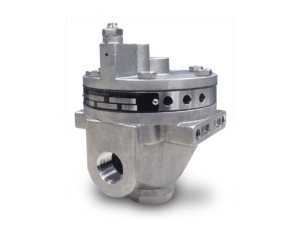
When the positioner’s output air volume is insufficient to quickly fill large-volume actuators, the amplifier uses a small signal to control large flow rates, significantly reducing valve stroke time. Common on large-bore control valves and quick-opening applications.
📋 Common Models
Fisher 2625, SMC, Norgren
⚠️ Field Failures
- Slow action (excessive amplifier dead band)
- Sticking/creeping movement
- No response (pilot valve blockage)
💡 Testing Tip: Apply signal directly at positioner output and observe valve response. If amplifier lags, adjust bypass screw (if equipped).
Lock-up Valve: The Safety Fuse
🔧 Function
When instrument air supply fails or drops below setpoint, the lock-up valve automatically cuts off air between positioner and actuator, holding the valve in its last position. Prevents process upsets or safety incidents from unintended valve movement.
⚙️ Setting Guidelines
Lock-up pressure typically set to 60-70% of supply pressure (e.g., 0.4 MPa supply = 0.25-0.3 MPa lock-up setting).
📌 Important Reminder: Lock-up valves cannot replace emergency shutdown valves. They only “hold position”—they cannot actively drive the valve to a safe position. For fail-safe requirements, use spring-return actuators or air reservoirs.
Limit Switch/Position Transmitter: Telling the DCS “I’m There”
🔧 Function
Converts valve fully-open or fully-closed status into dry contact signals sent to DCS/PLC for interlocks and valve status indication. Critical for on/off valves.
📋 Types
Inductive proximity switches
Magnetic reed switches
Other Accessories
🎛️ Solenoid Valve
For rapid on/off control of switching valves; can also be used for air circuit switching.
📡 Pneumatic Relay
Similar to amplifier—used for long-distance air signal transmission or increased driving capability.
💨 Quick Exhaust Valve
Mounted at actuator exhaust port to accelerate exhaust and improve valve closing response.
📊 Position Transmitter
Converts mechanical valve position to 4-20mA signal for real-time monitoring.
📋 Quick Reference Table
| Accessory | Function | Key Selection Criteria | Failure Impact |
|---|---|---|---|
| Positioner | Precise position control | Hazardous area rating, protocol, single/double-acting | Inaccurate position, oscillation |
| Filter Regulator | Air purification & stabilization | Filtration rating (5μm), pressure range | I/P blockage, position drift |
| Volume Booster | Increased actuation speed | Flow coefficient Cv, pilot type | Slow response, no movement |
| Lock-up Valve | Hold position on air failure | Lock-up pressure, port size | Unintended movement on air loss |
| Limit Switch | Position status feedback | Contact rating, hazardous area, IP rating | False trips, no feedback |
🔧 Field Troubleshooting Guide
“Oscillation? Check the positioner.
Water in the bowl? Clean it out.
Too slow? Add a booster.
Lock-up pressure? Tune it right.
Bad feedback? Inspect the cam.
Seal failure? Replace the O-ring.
Small accessories matter—Check them one by one.”
✅ Three Key Takeaways
The positioner is the core; the filter regulator is the foundation. If either fails, the valve cannot function properly.
Large actuators must have volume boosters—or movement will be in “slow motion.” Air failure protection requires lock-up valves.
Accessory selection isn’t just about brand names—parameter matching (air pressure, flow capacity, hazardous area rating) is what matters.
📚 Related Technical Resources
Fisher 3582 Mechanical Positioner: Installation & Calibration Guide →
Fisher 67CFR and 67CFSR Filter Regulators: Technical Specifications →
Fisher Positioner Selection Guide: Comprehensive Catalog →
Fisher DVC6200 Digital Valve Controller: Structure & Principles →
Fisher FIELDVUE 4400 Smart Position Transmitter: Application Guide →