





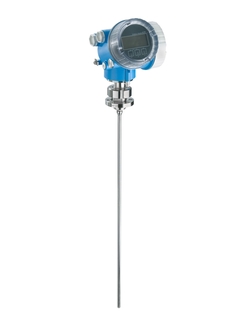
Critical Technical Advantages
-
ASME BPE and USP Class VI Compliance: The FMP53 is engineered for the most sensitive processes. Its materials and surface finishes (typically Ra < 0.76 µm) meet the rigorous standards required for biopharmaceutical production and injectable medicine manufacturing.
-
In Situ Validation: A major cost-saving feature of the FMP53 is the ability to validate the measurement performance without removing the sensor from the process. This minimizes the risk of contamination and reduces the downtime associated with traditional calibration checks.
-
Resistance to Foam and Agitation: Guided radar technology is inherently more robust than non-contact ultrasonic or radar methods when dealing with surface foam or moved surfaces caused by agitators. The probe ensures the radar signal reaches the liquid surface and returns successfully, even in turbulent conditions.
-
Spray Head Compatibility: In many hygienic tanks, cleaning is performed via spray heads. The FMP53 is designed to ignore the interference caused by the falling film of cleaning liquid, ensuring the level measurement remains stable during Clean-in-Place (CIP) cycles.
-
Multi-Echo Tracking Evaluation: This advanced software filters out false signals from tank internals like baffles or agitator blades. By continuously tracking the true level echo, the device provides maximum reliability throughout the filling and emptying cycles.
-
Heartbeat Technology: This integrated diagnostic suite monitors the device health 24/7. It can identify probe coating or electrical issues before they lead to a failure, supporting predictive maintenance and reducing the frequency of manual inspections.
-
HistoROM Concept: All device parameters are stored in an integrated data chip. This allows for fast commissioning and ensures that if the transmitter electronics are ever replaced, the configuration can be restored instantly without needing a PC.
Detailed Technical Performance Matrix
| Specification | Technical Details and Ranges |
| Measuring Principle | Guided Wave Radar (Time-of-Flight) |
| Measuring Range | Rod: up to 6 m (20 ft) |
| Measurement Accuracy | ±2 mm (0.08″) |
| Process Temperature | -20 to +150 °C (-4 to +302 °F) |
| Process Pressure | -1 to +16 bar (-14.5 to +232 psi) |
| Surface Roughness | Ra ≤ 0.76 µm (standard) or Ra ≤ 0.38 µm (electropolished) |
| Wetted Materials | 316L (standard), USP Class VI compliant seals |
| Communication | 4-20 mA HART, PROFIBUS PA, FOUNDATION Fieldbus |
| Safety & Approvals | SIL 2/3, WHG, ASME BPE, USP Class VI, 3-A, EHEDG |
Primary Applications
-
Biopharmaceutical Reactors: Level measurement in fermentation and cell culture vessels where sterility and ASME BPE compliance are mandatory.
-
Beverage Processing: Monitoring juice, beer, or soda levels in tanks that undergo frequent CIP and SIP cycles.
-
Pure Water Systems: Level tracking in Water-for-Injection (WFI) and Purified Water (PW) storage tanks.
-
Ingredient Storage: Managing levels of liquid sweeteners, oils, or flavors that may produce foam during filling.
-
Cosmetic Production: Level control in mixing vessels for creams and lotions where surface turbulence and changing media properties are common.