




Technical Characteristics and Modular Flexibility
-
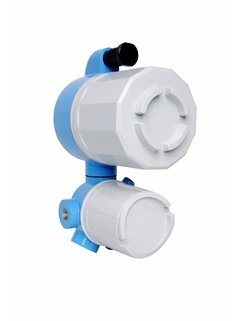
Remote Calibration: One of the standout features of the TMD1 is the ability to perform calibration and adjustment of the transmission output using a Handheld Terminal (HHT). This allows technicians to fine-tune the system after installation without mechanical intervention at the tank top.
-
Multi-Protocol Communication: The transmitter is highly compatible, supporting a variety of industry-standard protocols such as V1, BCD, and Sakura. This ensures it can transmit level, temperature, and alarm data to almost any existing Distributed Control System (DCS).
-
Modular Design: The TMD1 is built on a modular architecture. Depending on the application requirements, users can install specific modules for temperature A/D conversion, remote transmission, level alarms, or even outputs for operating external instruments.
-
HART Integration: The device supports HART communication, allowing for the direct connection of HART-compatible temperature sensors. This simplifies wiring and enhances the accuracy of temperature-compensated volume calculations.
-
Environmental Resilience: Available in both weather-proof and flameproof versions, the TMD1 is designed to operate in harsh industrial atmospheres. The flameproof type is specifically rated for hazardous areas with temperatures up to +40°C.
Technical Specification Matrix
| Feature | Technical Details |
| Compatible Gauge | Field Level Gauge LT5 series |
| Communication Protocols | V1, BCD, Sakura, HART |
| Ambient Temp (Weather-proof) | -20 to +60 °C (-4 to +140 °F) |
| Ambient Temp (Flameproof) | -20 to +40 °C (-4 to +104 °F) |
| Functions | Level, Temperature, Alarm transmission |
| Configuration | Via Handheld Terminal (HHT) |
Primary Applications
-
Retrofitting Legacy Tanks: Upgrading existing mechanical tank gauges to digital transmission systems to enable remote inventory monitoring.
-
Remote Level Monitoring: Transmitting accurate liquid level data from the tank farm to a centralized control room in refineries or chemical plants.
-
Temperature Compensated Gauging: Integrating HART temperature sensors to provide the data necessary for calculating Net Standard Volume.
-
Safety and Alarm Management: Setting up remote high-level or low-level alarms to prevent overfills or pump cavitation in bulk storage.
-
Inventory Control Systems: Serving as the data acquisition point for tank farms using specialized protocols like Sakura or V1 for global trade compliance.