




Key Benefits and Advantages
-
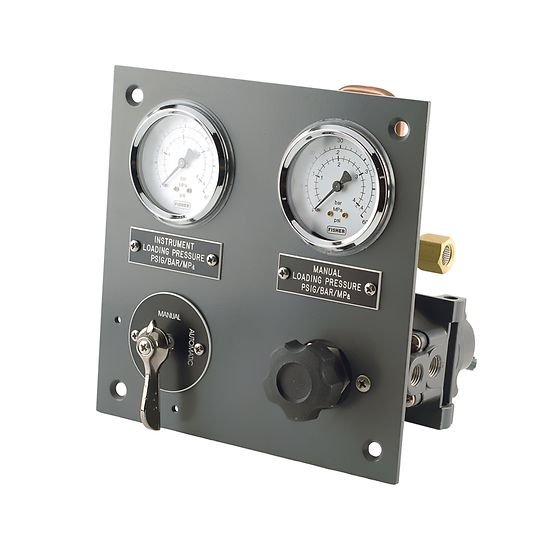
Control Flexibility: The 670 Series provides a stable and repeatable pneumatic output. This makes it ideal for a wide range of applications, from setting the setpoint on a larger pilot-operated regulator to manually positioning a control valve in a bypass loop.
-
Convenient Fingertip Control: The regulator features a large, easy-to-grip adjustment knob. This allows operators to make fine-tuned pressure adjustments with minimal effort, providing the “fingertip” sensitivity required for delicate process tuning.
-
Easy Connections: Designed with the technician in mind, the 1/4 inch NPT connections are positioned for easy access behind the panel. This simplifies the plumbing of instrument air or gas lines during initial setup or maintenance.
-
Compact and Rugged Design: The small footprint allows multiple 670 Series regulators to be mounted in a relatively small panel space. Despite its size, the construction is robust enough to handle the vibration and environmental demands of industrial facilities.
-
Panel-Board Integration: Each unit comes equipped with a mounting nut and is designed to fit through standard panel cutouts, ensuring a clean and professional appearance on the face of the control board.
-
Reliability: Like all Fisher products, the 670 Series is built to provide years of service with minimal drift, ensuring that the manual setpoint stays exactly where the operator intended.
Technical Properties
-
Operation: Direct-operated manual pressure loader.
-
Maximum Inlet Pressure: 250 psig / 17.2 bar.
-
Outlet Pressure Ranges: Multiple spring ranges are available to provide specific control increments, such as 0 to 30, 0 to 60, or 0 to 100 psig.
-
Body Material: Typically aluminum for a balance of strength and light weight.
-
End Connections: 1/4 inch NPT (one inlet and two outlet ports to allow for gauge mounting).
-
Mounting: Suitable for panels up to 7/16 inch / 11 mm thick.
Field of Application
The 670 Series is the preferred interface for manual pneumatic control. It is commonly found in utility stations and process skids where automated control must be supplemented by manual overrides or setpoint adjustments.
Primary Industries and Uses:
-
Gas Distribution: Manually loading the pilot of a large city gate regulator to adjust system pressure.
-
Power Generation: Providing manual signal air to position dampers or large steam valves during startup procedures.
-
Chemical Plants: Manual loading of pressure-balanced regulators on chemical storage tanks.
-
Test Benches: Used in laboratory or maintenance shop settings to provide a controlled, adjustable air source for testing pneumatic instruments.