


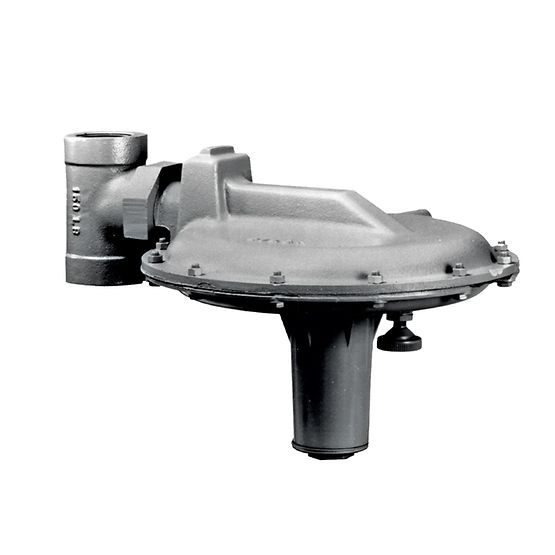
Key Benefits and Advantages
-
Accuracy of Control: The Y692 is equipped with a large-area diaphragm that provides high sensitivity to minute changes in tank pressure. This allows the regulator to maintain extremely accurate setpoints even at very low pressures, which is critical for protecting low-pressure storage vessels.
-
Speed of Response: Because it is a direct-operated regulator with internal registration, there is no delay caused by long downstream control lines. The Y692 reacts almost instantaneously to pressure drops caused by thermal contraction or rapid liquid pump-out.
-
Ease of Installation: The internal registration design eliminates the need for an external sensing line, significantly simplifying the installation process. This reduces the number of potential leak points and lowers overall piping costs.
-
Ease of Inspection and Maintenance: The regulator is designed for easy access to internal parts. The diaphragm and valve plug can be inspected or replaced by simply removing the bonnet, often without removing the valve body from the header line.
-
Vessel Protection: By maintaining a consistent positive pressure, the Y692 prevents atmospheric air (and moisture) from entering the tank, which protects both the product quality and the structural integrity of the vessel.
-
Compact Design: Its self-contained nature makes it suitable for installations where space on top of the tank is limited or where a simplified maintenance profile is required.
Technical Properties
-
Operation: Self-operated pressure reducing.
-
Pressure Sensing: Internal registration (no external control line required).
-
Setpoint Range: Optimized for very low pressures, typically measured in inches of water column or millibars.
-
Body Sizes: Available in standard sizes suitable for common nitrogen padding headers, such as 1-inch and 2-inch NPT or flanged.
-
Materials: Available in Cast Iron, Steel, and Stainless Steel to accommodate various process environments and corrosive requirements.
Field of Application
The Type Y692 is a versatile and economical choice for tank padding in facilities that prioritize simplicity and fast response.
Primary Industries and Uses:
-
Chemical Storage: Preventing the entry of oxygen into tanks containing flammable or reactive chemicals.
-
Food and Beverage: Maintaining an inert atmosphere over edible oils or juices to prevent spoilage and color changes.
-
Pharmaceutical: Protecting sensitive raw materials from atmospheric moisture contamination.
-
Fuel Storage: Reducing the risk of combustion by ensuring a constant inert gas layer above volatile fuels.