





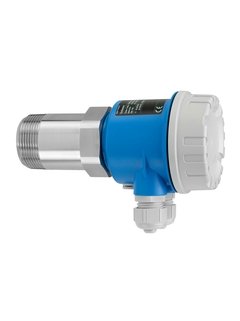
Technical Characteristics and Process Advantages
-
Non-Contact Measurement: The FQR56 can detect material from outside a container or through a non-conductive window. This eliminates the need for process-wetted parts, drastically reducing wear and tear in abrasive applications like gravel or sand.
-
Wide Measuring Range: With a maximum range of 100 meters (328 ft), the barrier is suitable for monitoring large stockpiles, wide conveyor belts, or extremely large storage silos.
-
Mechanical Robustness: The device features an optional process-wetted ceramic diaphragm for extreme durability. The electronics housing can be rotated 360°, allowing for perfect alignment of cable entries even after the process connection is tightened.
-
Visual Signal Strength: The system provides a clear indication of signal strength at the receiver, making it easy to align the transmitter and receiver during commissioning and to monitor for potential signal degradation over time.
-
Backward Compatibility: The FQR56 is mechanically compatible with the previous FQR50 series. This allows for simple “drop-in” replacements using existing adapter flanges, brackets, and sight glasses, minimizing retrofitting costs.
Technical Specification Matrix
| Feature | Technical Details |
| Measuring Principle | Microwave Barrier (Transmitter) |
| Interaction | Pairs with Soliwave FDR56 Receiver |
| Measuring Range | Max. 100 m (328 ft) |
| Ambient Temperature | -40 to +70 °C (-40 to +158 °F) |
| Process Connections | Threads (Standard or via Adapter Flanges) |
| Safety Approvals | International Explosion Protection (ATEX, etc.) |
| Signal Indication | Signal strength LED on receiver |
Primary Applications
-
Bulk Solids Detection: Reliable switching for wood chips, sawdust, flour, plaster, cement, and ash.
-
Object Counting and Control: Used on conveyor lines to count bags, boxes, or large cardboard shreds as they pass through the microwave beam.
-
Free Fall Monitoring: Detecting the flow of material in fall shafts or chutes to identify blockages or confirm material discharge.
-
Harsh Environmental Sensing: Ideal for extremely dusty or steamy environments where ultrasonic or optical sensors would fail due to signal interference.
-
Non-Invasive Level Control: Monitoring levels in plastic tanks or glass-lined vessels without drilling holes or installing internal probes.