





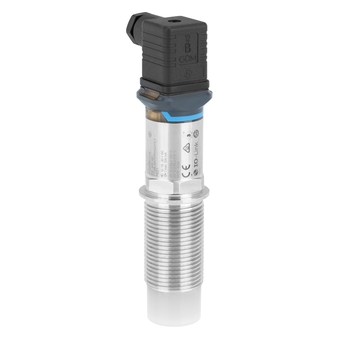
Karakteristik Teknis dan Manfaat Kinerja
-
Kompensasi Penumpukan Terbaik di Kelasnya: FTI26 dirancang untuk membedakan antara level produk sebenarnya dan lapisan debu atau kerak halus yang sering melapisi sensor dalam aplikasi bubuk. Hal ini memastikan deteksi tinggi (MAX) atau rendah (MIN) yang andal tanpa perlu pembersihan terus-menerus.
-
Siap untuk Industri 4.0: Komunikasi IO-Link terintegrasi memungkinkan konfigurasi digital, diagnostik terperinci, dan penggantian perangkat yang mudah melalui alat rekayasa, mengurangi kompleksitas pemeliharaan dan waktu henti.
-
Sensitivitas Tinggi: Mampu mendeteksi bubuk ringan dan halus serta material bertekstur lembut seperti rempah-rempah, bubuk kopi, dan deterjen pakaian. Biasanya tidak memerlukan penyesuaian individual pada media, menawarkan kemudahan penggunaan (plug-and-play).
-
Desain Higienis dan Kokoh: Sensor ini memenuhi persyaratan higienis yang paling ketat (3A, EHEDG) dan dirancang untuk tahan terhadap pencucian bertekanan tinggi (IP69). Hal ini menjadikannya sempurna untuk pengolahan makanan di mana kebersihan adalah hal yang mutlak.
-
Ukuran Ringkas: Ukurannya yang kecil memungkinkan pemasangan di nosel sempit atau ruang terbatas di mana sakelar padatan curah tradisional tidak akan muat.
Matriks Spesifikasi Teknis
| Fitur | Detail Teknis |
| Prinsip Pengukuran | Kapasitansi (Tingkat Titik) |
| Sifat Sedang | Padatan berbentuk bubuk dan butiran halus |
| Suhu Proses | -20 hingga +80 °C (-4 hingga +176 °F) |
| Tekanan Proses | -1 hingga +6 bar (-14,5 hingga +86 psi) |
| Koneksi Proses | Ulir G 1″; Tri-Clamp 2″ (melalui adaptor) |
| Komunikasi | IO-Link / DC-PNP |
| Kelas Perlindungan | IP 67 / IP 69 |
Aplikasi Utama
-
Makanan dan Minuman: Deteksi level di silo untuk tepung, gula, garam, rempah-rempah, dan bubuk kopi.
-
Perawatan Rumah dan Pribadi: Memantau deterjen bubuk, sabun batangan, dan kosmetik bubuk.
-
Pengolahan Plastik: Mendeteksi butiran plastik atau hasil penggilingan ulang di dalam wadah penampung dan pengumpan kecil.
-
Farmasi: Kontrol level titik untuk bubuk halus dalam mesin pencetak pil atau mesin pengemas.
-
Kondisi Pemasangan yang Sempit: Ideal untuk corong, saluran, dan pipa kecil di mana sensor yang ringkas dan terpasang rata diperlukan untuk menghindari penghambatan aliran.