





Product Critical Technical Advantages
-
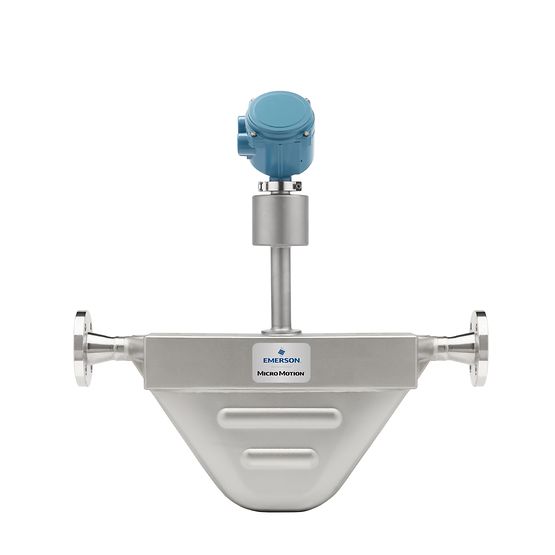
Engineering excellence in thermal management features a specialized sensor design that allows the F100A to operate reliably at temperatures far exceeding standard Coriolis meters. The extended neck architecture isolates the transmitter and electronics from the high-temperature process piping, preventing thermal damage and ensuring long-term electronic reliability.
-
Precision engineering for stable mass flow measurement ensures that thermal expansion of the sensor tubes does not compromise data accuracy. The F100A is factory-compensated for temperature effects, providing consistent repeatability and low uncertainty even during significant process temperature swings.
-
Integration of operational intelligence through Smart Meter Verification (SMV) provides an essential safety layer for high-temperature operations. It allows operators to verify the structural health of the sensor tubes and the integrity of the electronics while the process is running at full temperature, eliminating the need for risky manual inspections.
-
Robust immunity to process noise and vibration ensures the F100A remains accurate despite the turbulence often associated with high-temperature fluid transport. Advanced digital signal processing filters out mechanical noise from pumps and heaters, delivering a clean and stable flow signal to the control room.
-
316L Stainless Steel durability provides excellent mechanical strength and corrosion resistance at elevated temperatures. This high-grade material ensures that the sensor maintains its pressure-containing integrity and measurement performance throughout its service life in demanding thermal applications.
-
Reliable multi-variable measurement delivers simultaneous data for mass flow, volume flow, density, and temperature. By providing an integrated temperature reading, the F100A allows for real-time monitoring of thermal efficiency and ensures that density measurements are accurately corrected for thermal expansion.
Common Industry Applications
-
Chemical & Petrochemical: Ideal for measuring hot feedstock, molten polymers, and high-temperature resins. It ensures precise mass flow control during polymerization or blending processes where temperature must be kept high to maintain fluid viscosity.
-
Oil & Gas: Used for monitoring high-temperature steam condensate, hot fuel oils, and bitumen transfer on equipment skids. The sensor’s heat-resistant design is perfect for heavy oil processing and refining environments.
-
General Industrial: Frequently applied in heat transfer systems to monitor the flow of hot thermal oils or in the manufacture of adhesives and coatings where the process requires constant high-temperature conditions.