








In chemical, oil & gas, and process industries, instrument fittings are critical components connecting measurement devices to process piping. Selecting the right fitting ensures system integrity, measurement accuracy, and operational safety. This comprehensive guide covers the six most common types of industrial instrument fittings to help engineers make informed decisions.
I. Connection Structure Types (6 Major Categories)
1. Compression Fittings (Swagelok Type)
Compression fittings are the most widely used connection method for instrument impulse tubing. The dual-ferrule design (front ferrule + back ferrule) creates radial compression when the nut is tightened, gripping the tube wall evenly to form a metal-to-metal seal.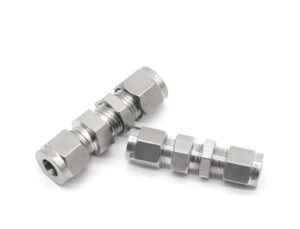
- Pressure Rating: ≤32 MPa (standard), high-pressure versions exceed 60 MPa
- Temperature Range: -196°C to +450°C (material dependent)
- Tube Sizes: Φ6mm, Φ8mm, Φ10mm, Φ12mm (standard instrument tubing)
- Materials: 316L stainless steel (preferred), 316, 304
- Typical Applications: Pressure transmitter impulse lines, analyzer sample systems, hydraulic systems
Selection Tip: For H₂S-containing oil & gas applications, 316L material with dual-ferrule construction is mandatory to ensure long-term sealing reliability.
2. Threaded Fittings (NPT / BSPT / G / M)
Threaded connections are standard for pressure gauges, transmitters, and other instrument process interfaces. Different thread standards apply to different regional equipment systems.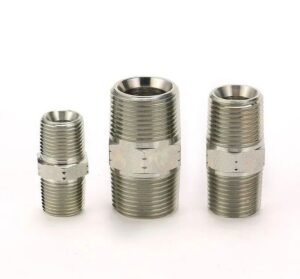
| Thread Type | Standard | Thread Angle | Common Sizes | Primary Use |
|---|---|---|---|---|
| NPT | ANSI/ASME B1.20.1 | 60° tapered | 1/8″, 1/4″, 1/2″, 3/4″ | US pressure gauges, transmitters |
| BSPT | BS 21 / ISO 7 | 55° tapered | R1/4″, R1/2″, R3/4″ | European equipment, British systems |
| G Thread | BS 2779 / ISO 228 | 55° parallel | G1/4″, G1/2″, G3/4″ | Low-pressure pneumatic, cable glands |
| M Thread | ISO 261/262 | 60° metric | M20×1.5, M14×1.5 | Thermocouples, junction boxes, glands |
⚠️ Warning: NPT and BSPT may look similar, but they have different thread angles and pitches. Never mix them. Cross-threading will damage the fitting and cause serious leaks.
3. Quick Connect Fittings
Quick connect fittings enable tool-free push/pull connections, significantly improving efficiency for field calibration and temporary connections.
- Working Pressure: ≤1.6 MPa (standard), high-pressure versions exceed 40 MPa
- Sealing Method: O-ring seal (NBR/Viton)
- Main Types: Pneumatic quick connects, hydraulic quick connects, instrument-specific quick connects
- Typical Applications: Pressure calibrator connections, temporary sampling, equipment commissioning
4. VCR Fittings (Metal Gasket Face Seal)
VCR (Vacuum Coupling Radius) fittings use precision-machined metal face seals without elastomers, making them ideal for ultra-high purity gas and extreme service conditions.
- Pressure Range: Vacuum to 100 MPa
- Sealing Method: Metal gasket (nickel/stainless steel) face seal, no O-rings
- Surface Finish: Ra ≤ 0.25 μm (high smoothness required)
- Typical Applications: Semiconductor UHP gas, highly corrosive media, high-temperature high-pressure systems
5. Cable Glands (Cable Sealing Fittings)
Cable glands provide sealing, strain relief, and explosion protection for instrument junction boxes and enclosures.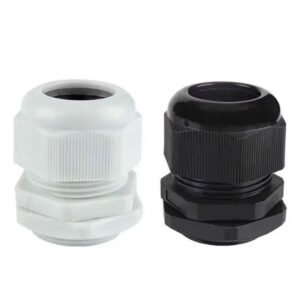
- Protection Rating: IP65 to IP68 (water and dust resistant)
- Hazardous Area Certifications: Ex d IIC T6 Gb (flameproof), Ex e (increased safety)
- Common Sizes: M20×1.5, M25×1.5, NPT1/2″, G1/2″
- Material Options: 316L stainless steel (corrosive environments), nickel-plated brass (general service)
- Seals: Silicone/EPDM (high temperature), NBR (oil resistant)
6. Flanged Connections (RF / FF / RTJ)
Flanged connections are used for medium-to-high pressure, large bore transmitter and control valve process interfaces, facilitating maintenance and removal.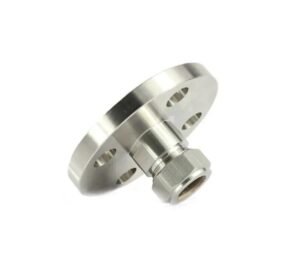
- Pressure Classes: Class 150 to Class 2500 (ANSI), PN16 to PN400 (DIN)
- Face Types: RF (raised face), FF (flat face), RTJ (ring type joint)
- Common Sizes: 1/2″ to 4″ (typical for transmitters and control valves)
- Standards: ANSI B16.5, EN 1092-1, HG/T 20592
II. Functional Configuration Types
| Configuration | Function | Typical Application |
|---|---|---|
| Straight | Direct inline connection | Tubing extension, direct transmitter mounting |
| Elbow (90°) | 90-degree direction change | Space-constrained installations, obstacle avoidance |
| Tee | One inlet, two outlets | Impulse line vent/drain, sample branch connections |
| Reducer | Different size transition | Φ12 to Φ8, NPT1/2 to NPT1/4 |
| Adapter | Thread/size conversion | NPT to G, M20×1.5 to NPT1/2 |
| Plug/Cap | Seal unused ports | Instrument spare ports, test port sealing |
III. Materials and Sealing Methods
Material Selection
- 316L Stainless Steel: Preferred material, general corrosion resistance, suitable for most chemical applications
- 316 Stainless Steel: Molybdenum content provides better pitting resistance than 304
- 304 Stainless Steel: Economical choice for non-corrosive media
- Brass: Low-pressure, non-corrosive gas applications
- Monel Alloy: Severe corrosion environments (hydrofluoric acid, seawater)
- Hastelloy: Extreme corrosion (strong oxidizing acids)
Sealing Methods
| Seal Type | Material | Service Conditions |
|---|---|---|
| Metal Gasket | Copper, stainless steel, nickel | High pressure/temperature (>200°C) |
| Lens Ring | 316L stainless steel | Ultra-high pressure (>32 MPa) |
| O-ring | FKM/Viton | Oil and chemical resistant (-20 to 200°C) |
| O-ring | EPDM | Water, steam, mild chemicals (-50 to 150°C) |
| O-ring | FFKM/Kalrez | Extreme chemical resistance, high temp (-20 to 320°C) |
IV. Quick Selection Reference
| Application | Recommended Fitting | Material/Specification |
|---|---|---|
| Impulse Tubing (Φ6/8/12) |
Compression Fitting (Swagelok Type) | 316L stainless steel |
| Pressure Gauge/Transmitter Process Connection | NPT1/2″ or NPT1/4″ Thread | 316L stainless steel |
| Hazardous Area Junction Box | Cable Gland | M20×1.5, 316L or nickel-plated brass |
| UHP Gas/Corrosive Media | VCR Metal Gasket Seal | 316L VAR (Vacuum Arc Remelt) |
| Field Calibration/Temporary | Quick Connect Fitting | Stainless steel body, FKM seal |
| Control Valve/Large Bore Transmitter | Flanged Connection (RF Face) | Class 150-600, 316L |
V. Installation and Maintenance Best Practices
- Compression Fitting Installation: Use proper wrenches. Hand-tighten the nut first, then rotate 1-1/4 turns (1/4″ tube) or 1-3/4 turns (1/2″ tube). Never over-tighten.
- Thread Sealing: For NPT threads, use PTFE tape (3-5 wraps in thread direction) or thread sealant. Prevent tape from entering the line.
- VCR Fittings: Use specified torque wrenches to ensure proper metal gasket seating. Inspect gasket surface for scratches when reusing.
- Material Compatibility: Different metals in direct contact may cause galvanic corrosion. Use insulating gaskets when necessary.
- Regular Inspection: For high-pressure/high-temperature service, check fitting tightness every 6 months. Address leaks immediately.
VI. Frequently Asked Questions
Q: Can NPT and BSPT be interchanged?
A: Absolutely not. Although they appear similar, the thread angle (60° vs 55°) and pitch are different. Forcing them together will damage threads and cause leaks.
Q: Can compression fittings be reused?
A: Yes, but with limitations. The front ferrule deforms during initial installation. While the fitting can be disassembled and reinstalled, sealing performance decreases. Replace ferrules for critical applications.
Q: What is the difference between 316 and 316L?
A: 316L is the low-carbon version of 316 (carbon ≤0.03%). It offers better resistance to intergranular corrosion after welding, making it the preferred choice for instrument fittings.
Q: How to verify cable gland hazardous area ratings?
A: Check the product marking for certification codes like “Ex d IIC T6 Gb” (flameproof, IIC gas group, T6 temperature class). Ensure compatibility with the hazardous zone classification.
Conclusion
Instrument fittings may be small components, but they are fundamental to reliable industrial measurement systems. Proper selection, correct installation, and regular maintenance ensure long-term sealing performance. For application-specific fitting recommendations, or for compatible fittings for Fisher, Rosemount, and Endress+Hauser instruments, contact our technical team.
Contact Us:
📧 Email: sales@yunrui-controls.com
📱 WhatsApp: 18710784030
Related Reading
- Rosemount 3051 Pressure Transmitter Selection Guide: Technical Specifications
- Fisher Valve Selection Guide: Complete Technical Handbook for Industrial Applications
- E+H Instrument Field Commissioning & Maintenance Guide
- Control Valve Waterproof and Moisture-Proof Measures: Complete Industrial Protection Guide
- Fisher 67CFR Series Filter Regulators: Technical Specifications and Model Selection