





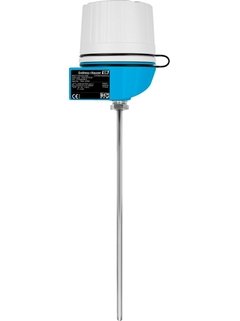
Critical Technical Advantages
-
Extreme Temperature Capability: Designed to handle a broad thermal range from –40 to +1,100 °C (–40 to +2,012 °F), the TC65 is the preferred choice for combustion processes, high-temperature reactors, and exhaust systems where standard RTDs reach their physical limits.
-
Comprehensive Hazardous Area Protection: The device is certified for global safety standards with multiple protection types, including Intrinsic Safety (Ex ia), Flameproof (Ex d), and Non-Sparking (Ex nA). This makes it suitable for the most volatile zones in refineries and chemical plants.
-
Design Compliance (DIN 43772): The measurement inserts and mechanical configurations follow DIN 43772 standards, ensuring a high degree of interchangeability and compatibility with existing thermowells and plant infrastructure.
-
Flexible Installation: The TC65 can be installed using fixed threads or sliding compression fittings. The sliding fitting is particularly useful for fine-tuning the immersion length on-site or for accommodating thermal expansion in high-heat vessels.
-
Enhanced Signal Reliability: By utilizing an optional iTEMP head transmitter, the device converts the millivolt TC signal into a stable 4 to 20 mA or HART signal right at the measuring point. This significantly reduces measurement errors caused by long extension wires and electromagnetic interference.
-
High Environmental Resistance: With an IP68 protection rating and a static pressure capability of up to 75 bar (depending on the connection), the TC65 is built to withstand outdoor exposure, heavy washdowns, and high-pressure process conditions.
Technical Performance Matrix
| Feature | Details |
| Measuring Range | –40 to +1,100 °C (–40 to +2,012 °F) |
| Max. Static Pressure | 75 bar (1,088 psi) |
| Protection Class | IP68 |
| Area Classification | ATEX/IECEx (Ex d, Ex ia, Ex nA), NEPSI, CSA, FM |
| Standard | DIN 43772 / DIN EN 50446 |
| Installation | Direct contact or with thermowell |
Primary Applications
-
Power Stations: Monitoring temperatures in boiler systems, turbines, and flue gas ducts where extreme heat is a constant.
-
Petrochemical Refining: High-temperature measurement in distillation columns, crackers, and flare headers.
-
Fine Chemicals: Precise control of exothermic reactions in pressurized reactors.
-
Environmental Engineering: Temperature tracking in waste-to-energy plants and industrial incinerators.
-
Heavy Industry: Monitoring heat treatment furnaces, kilns, and smelting processes.